
If you’ve spent any time around a working farm, you already know this: water doesn’t sit quietly in the background the way it does in a city home.
It’s everywhere. In the soil, in the feed, in the troughs, in the rhythm of daily work. It shapes how crops grow, how animals behave, how the entire operation holds together.
And yet, for something so central, it’s often taken at face value.
Turn it on, fill it up, keep moving.
Until something feels off.
When the Small Changes Start to Matter
On a farm, water issues rarely announce themselves loudly.
It’s more subtle than that.
Maybe crop growth looks uneven in certain patches. Maybe livestock seem less active, or water intake changes slightly. Sometimes it’s visible—sediment in troughs, buildup in pipes—but often, it’s just a feeling that something isn’t quite right.
You notice it in passing.
And then, gradually, you start paying attention.
Because on a farm, small changes don’t stay small for long.
The Role Water Plays in Crop Health
Healthy crops depend on more than just sunlight and soil. Water quality plays a bigger role than many people realize.
Minerals, pH levels, and contaminants can all affect how plants absorb nutrients. Even slight imbalances can influence growth patterns, sometimes in ways that are hard to trace back to water.
That’s where agriculture water treatment becomes less of a technical add-on and more of a practical necessity.
It’s not about overengineering the process.
It’s about making sure the water supporting your crops is doing exactly that—supporting them, not holding them back.
Systems That Work in the Background
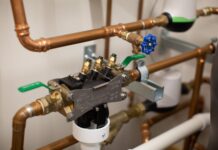
Most farms rely on a network of pumps, pipes, storage tanks, and delivery points. These systems aren’t always visible, but they’re constantly in motion.
And when they’re working well, you don’t think about them.
That’s the goal.
But when something shifts—pressure drops, flow becomes inconsistent, or equipment starts to wear—you notice.
That’s why well-designed farm water systems matter.
They’re not just about moving water from one place to another. They’re about reliability.
Consistency.
The kind of performance you can depend on without second-guessing it every day.
Livestock and Water Quality—An Overlooked Connection
Animals don’t complain, at least not in ways that are easy to interpret.
But their behavior tells a story.
Water intake, feeding patterns, overall health—all of these can be influenced by the quality of the water they’re consuming.
If water tastes off or contains impurities, animals may drink less. And that can have a ripple effect—on growth, on productivity, on overall well-being.
This is where livestock water systems come into focus.
It’s not just about providing access to water. It’s about ensuring that water is clean, consistent, and suitable for daily consumption.
Because when water quality improves, the impact often shows up quietly—but clearly.
The Challenge of Variability
One of the realities of farming is that conditions change.
Seasonally. Environmentally. Sometimes unpredictably.
Water sources can shift in composition depending on rainfall, groundwater levels, or surrounding activity. What worked perfectly last season might behave differently this time around.
And that variability can make water management feel like a moving target.
There’s no fixed solution. No one-size-fits-all answer.
Just a need to stay aware, to adapt, to respond when something changes.
The Balance Between Simplicity and Control
It’s easy to overcomplicate things when it comes to water systems.
There are advanced technologies, detailed filtration options, complex setups.
But on a farm, practicality matters.
You need solutions that work. That fit into your daily routine. That don’t require constant adjustment or attention.
The goal isn’t perfection.
It’s control—enough understanding and consistency to keep things running smoothly without adding unnecessary complexity.
The Small Improvements That Add Up
What’s interesting is that improving water quality on a farm doesn’t always lead to dramatic, overnight results.
Instead, the benefits tend to build over time.
Healthier crops. More consistent yields. Livestock that behave more predictably. Equipment that lasts longer with fewer issues.
These changes don’t always shout for attention.
But they’re there.
And over time, they make a difference.
Paying Attention Without Overthinking
Farming already involves enough moving parts.
Weather, soil, equipment, labor—there’s always something to manage.
Water shouldn’t become another overwhelming variable.
But it also shouldn’t be ignored.
The key is finding that middle ground.
Paying attention to what your water is doing, without overanalyzing every detail.
Noticing patterns. Responding when needed.
Keeping things simple, but not careless.
A Thought That Stays With You
If something about your water has caught your attention—even briefly—it’s probably worth exploring.
Not because there’s a major problem.
But because water, on a farm, influences more than we often realize.
And small improvements can ripple outward in ways that are hard to predict—but easy to appreciate once they happen.
Closing, Without a Full Stop
Out on the farm, water isn’t just a resource.
It’s part of the system. Part of the rhythm. Part of the outcome.
You don’t need to chase perfect solutions or overhaul everything at once.
But understanding your water—how it behaves, how it supports your work—can make a quiet, steady difference.
And sometimes, that’s exactly what you need.