From the journal · October 26, 2026
Cleaner Drinking Water at Home: Understanding Your Options Before You Buy
There’s something reassuring about filling a glass straight from the kitchen tap and taking a long drink without thinking twice. Unfortunately, not everyone feels that comfortable with their household water. Some people notice an unusual taste, others worry about contaminants they can’t see, and families using private wells may have questions about what’s entering their supply in the first place.
It’s easy to feel overwhelmed when you start researching water filters. One product promises better taste, another claims to remove dissolved impurities, and a third seems designed to solve every water problem imaginable. The truth is a little less dramatic: different systems serve different purposes, and the best choice depends on your water, your household, and what you actually need to remove.
Related reading: Making Home Water Systems Easier to Monitor and Maintain · Choosing the Right Commercial Water Softener for Your Business
A sensible place to begin is understanding the available options rather than buying equipment based on marketing claims.
What Makes Drinking Water Worth Testing?
Clear water isn’t necessarily safe water, just as water with a slightly unusual taste isn’t automatically dangerous. Some contaminants affect appearance or smell, while others cannot be detected without testing. That’s why appearance alone is a poor guide when deciding whether your water needs treatment.
Municipal water supplies are generally treated and monitored, but water can still be affected by distribution pipes, household plumbing, and storage conditions. Private wells and borewells require particular attention because their quality depends on local geology, groundwater conditions, and possible sources of contamination nearby.
This is where in-home water testing can help. Depending on the water source and your concerns, testing may assess hardness, pH, dissolved minerals, or particular contaminants such as nitrate, arsenic, or certain metals. A basic home kit can provide useful preliminary information, but laboratory testing is often more appropriate when safety is the main concern.
For example, a metallic taste might be associated with plumbing materials or dissolved metals, while white deposits on taps often point towards hard water. Neither symptom provides a complete diagnosis. Testing helps distinguish a cosmetic nuisance from a problem that requires more careful attention.
If you use a private well, consider testing for locally relevant contaminants at regular intervals and after events that could affect the supply, such as flooding or nearby changes in land use. If municipal water changes suddenly in colour, smell, or taste, check local advisories and investigate the cause before assuming a filter will fix it.
Understanding Reverse Osmosis Drinking Water
One option that receives plenty of attention is reverse osmosis drinking water treatment. Reverse osmosis, commonly shortened to RO, uses pressure to push water through a semipermeable membrane. The membrane allows water to pass while rejecting a substantial proportion of many dissolved substances.
Depending on the particular system and its condition, RO can reduce dissolved salts and certain contaminants, including some metals and nitrate. Performance varies, however, so it’s important to check independent testing or certification for the substances you want to reduce.
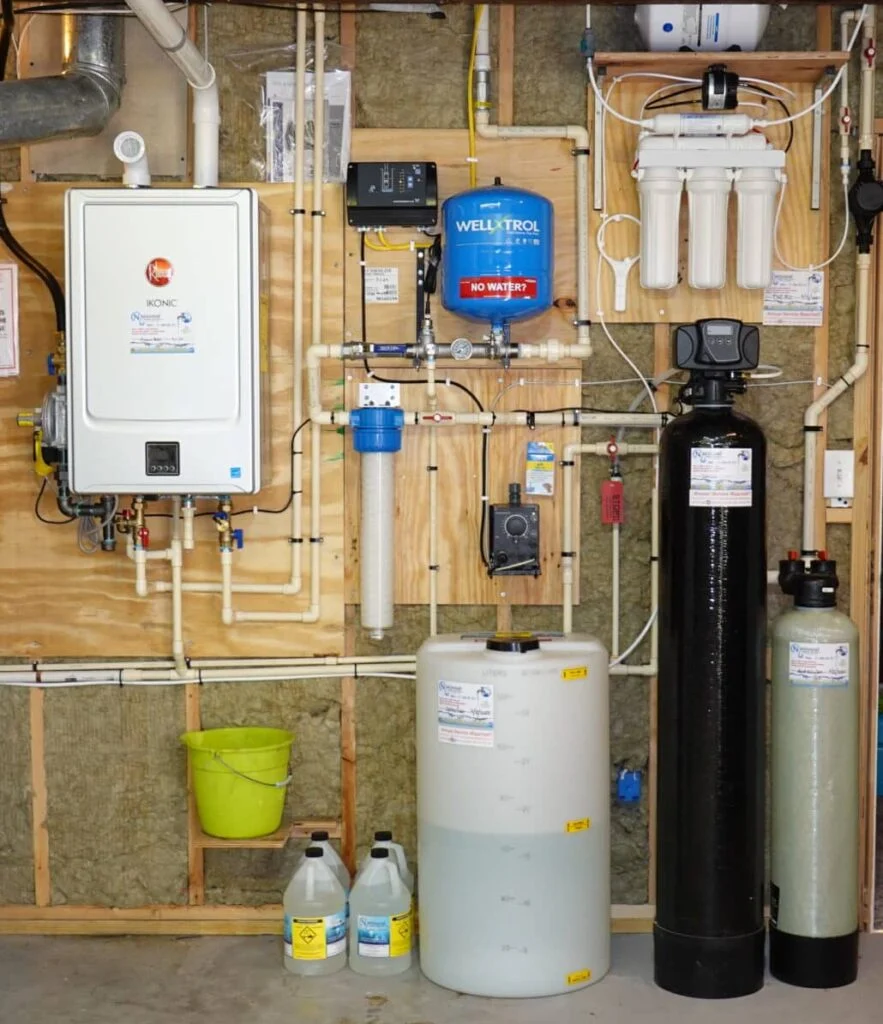
RO systems are often installed beneath the kitchen sink and provide treated water through a dedicated faucet. Many include prefilters to protect the membrane and a postfilter to improve taste. Some also include remineralisation stages, although these aren’t necessary for every household.
There are trade-offs. Conventional RO units produce wastewater during operation, and their filters and membranes need periodic replacement. The system may also remove minerals that contribute to water’s taste. That isn’t automatically a problem, but it is worth understanding before installation.
Most importantly, RO isn’t always necessary. If your water is already safe and your main concern is a chlorine taste, a suitable activated carbon filter may be enough. If hardness is the primary issue, a water softener may be more appropriate. The goal is to choose a technology that matches a verified need, not simply the most advanced-sounding option.
When Your Water Comes From a Private Well
Private wells and borewells can provide a dependable water source, but they also place more responsibility on the property owner. Unlike many municipal systems, private supplies may not be routinely monitored by a public water utility.
The composition can vary significantly from one location to another. Groundwater may contain naturally occurring minerals, iron, manganese, or other substances. Nearby agricultural activity, septic systems, industrial operations, and surface runoff can introduce additional concerns depending on local conditions.
Effective well water treatment begins with testing. A water sample can help establish whether the main issue is hardness, sediment, microbial contamination, or a particular dissolved contaminant. Different findings require different responses.
For instance, sediment filtration may remove visible particles, while disinfection using an appropriate method may be needed to control harmful microorganisms. Iron may require oxidation and filtration, and certain dissolved contaminants may call for specialised treatment. A standard carbon filter won’t reliably address every one of these problems.
It’s also important to inspect the well itself. A damaged cap, poor drainage around the wellhead, or a compromised casing can allow contaminants to enter. Treating the water without addressing the source may provide only a temporary solution.
If testing identifies a health-related concern, follow advice from a qualified water professional or local public-health authority. Until the water is confirmed safe, use an alternative drinking-water source when recommended.
How to Choose a Filter Without Wasting Money
The water-treatment market can make it seem as though every home needs a multi-stage purifier. In practice, the right setup might be simple or fairly sophisticated, depending on the results of your water assessment.
Start by listing your actual concerns. Is the water unsafe according to a test, or does it mainly have an unpleasant taste? Are you dealing with scale on appliances, visible particles, or a persistent odour? These are different problems, and they shouldn’t automatically lead to the same purchase.
Next, check what the product is certified to reduce. Look for claims supported by recognised standards and independent testing, and make sure the certification covers the specific contaminant that concerns you. A product advertised as having multiple filtration stages isn’t necessarily more effective than a simpler, properly selected filter.
Remember to account for ongoing costs, too. Replacement cartridges, membrane changes, electricity, maintenance visits, and wastewater can make a difference over several years. A filter that fits your budget initially may become expensive if replacement parts are difficult to obtain.
Installation and maintenance are equally important. Even an effective treatment system can perform poorly if filters are neglected, seals deteriorate, or the equipment is used outside its recommended conditions. Follow the manufacturer’s schedule and keep records of servicing.
Small Steps That Make a Real Difference
You don’t need to become a water-treatment expert overnight. Start with a few practical habits: keep an eye on changes in taste or appearance, maintain household storage tanks, replace filters on time, and investigate recurring plumbing problems.
If your water comes from a municipal supply, review available water-quality information. If you rely on a private well, arrange suitable testing and inspect the wellhead regularly. When a safety concern arises, don’t rely on smell, clarity, or a generic filter to tell you whether the water is safe.
These steps are straightforward, but they help you make informed decisions and avoid unnecessary equipment.
A Better Choice Begins With Reliable Information
Choosing drinking-water treatment doesn’t have to be complicated. Understand your source, test for the concerns that matter, and compare systems based on proven performance rather than bold promises.
Reverse osmosis can be useful for reducing many dissolved substances, while other filters and treatment methods may be better suited to specific needs. For private wells, testing and maintenance are particularly important because conditions can change over time.
Ultimately, cleaner drinking water isn’t about installing the biggest system or collecting the most filtration stages. It’s about knowing what you’re dealing with and choosing a solution that genuinely addresses it. With reliable information and a little routine care, you can make a confident decision about the water your household uses every day.