From the journal · October 26, 2026
Choosing the Right Commercial Water Softener for Your Business
Hard water rarely causes a business to shut its doors overnight. Instead, the problems tend to creep in gradually. White scale appears around faucets, water heaters become less efficient, cleaning takes longer, and equipment starts needing attention more often than expected. In places where water hardness is high, these small inconveniences can turn into a steady drain on time and operating costs.
For businesses that rely on water every day, a suitable softening system can make a genuine difference. Hotels, restaurants, laundries, fitness centers, and manufacturing facilities all have their own water demands, and the right solution depends on how much water they use and when they need it. Choosing wisely means looking beyond the equipment price and considering performance, maintenance, and the practical realities of running a busy operation.
Related reading: Cleaner Drinking Water at Home: Understanding Your Options Before You Buy · Removals Portsmouth UK and Manchester: A Complete Guide to Moving House Smoothly
Why Hard Water Matters in Commercial Settings
Hard water contains dissolved minerals, primarily calcium and magnesium. These minerals aren’t usually harmful to health at the levels commonly found in drinking water, but they can create operational headaches when they accumulate inside pipes, boilers, heat exchangers, and other equipment.
Scale buildup is especially troublesome in systems that heat water. Mineral deposits can interfere with heat transfer, reduce efficiency, and increase the need for cleaning or repairs. In laundries and hospitality businesses, hard water can also affect detergent performance and contribute to dull-looking fabrics or residue on glassware and fixtures.
The impact varies from one business to another. A small office with limited hot-water use may have little reason to install a large softener. A hotel operating multiple showers, laundry facilities, and commercial kitchens has a very different set of requirements.
Before investing in treatment equipment, arrange a water-hardness test and review your typical daily consumption. Those two pieces of information provide a useful starting point for selecting the right system.
Finding Equipment That Fits Your Operation
Commercial water treatment isn’t a one-size-fits-all purchase. Equipment must be selected according to hardness levels, peak water demand, the number of people or processes using water, and the amount of space available for installation.
Businesses exploring commercial water softeners should compare more than advertised capacity. Ask how much hardness the unit can remove between regeneration cycles, what flow rate it can support, and how it performs during periods of heavy use.
For example, a restaurant may experience a sharp rise in water demand during lunch and dinner service. A hotel can see simultaneous demand from guest showers, laundry equipment, and kitchen operations. If a softener is undersized, it may struggle to supply consistently softened water when several processes run together.
An oversized system isn’t necessarily better, either. It may cost more than necessary and could operate inefficiently if its capacity doesn’t match actual usage. A knowledgeable water treatment professional can calculate the likely demand and recommend equipment based on measured conditions rather than guesswork.
When High Capacity Becomes Essential
Some facilities use so much water that a standard residential-style unit simply isn’t a practical choice. Large laundries, food-processing facilities, hotels, and industrial operations may need equipment designed for sustained demand and demanding operating schedules.
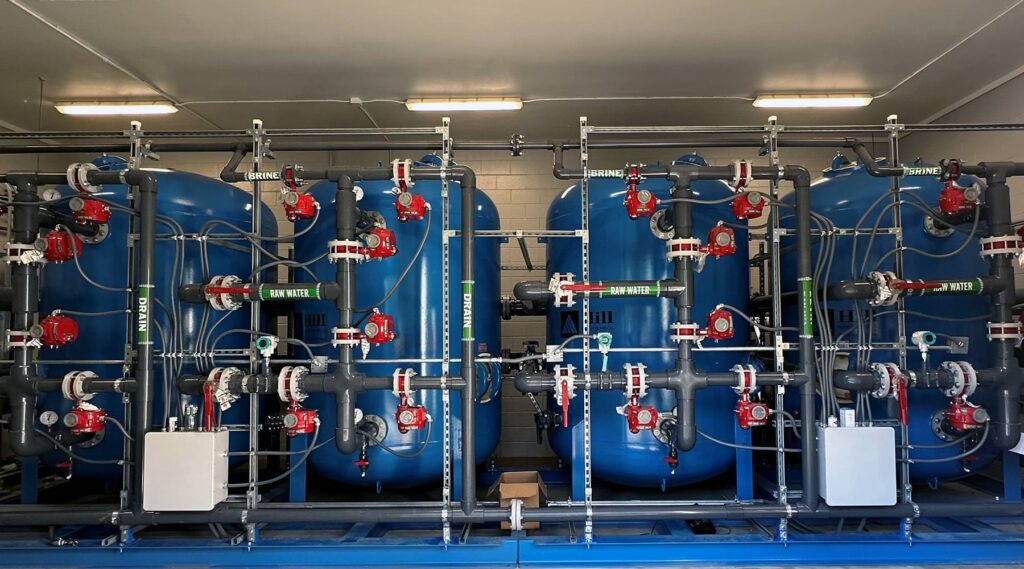
In these situations, high-capacity softening systems can provide the treatment volume needed for larger operations. Depending on the design, these systems may use larger resin vessels, higher-capacity control valves, or multiple tanks to manage water demand more effectively.
Capacity should still be assessed carefully. A system’s advertised rating doesn’t automatically mean it can supply that volume continuously under every condition. Actual performance depends on hardness, flow rate, operating settings, regeneration requirements, and the manufacturer’s specifications.
It’s worth asking the supplier to explain the assumptions behind the sizing recommendation. How much water does the business use on an average day? What is the busiest operating period? How much reserve capacity is needed if demand increases?
Thinking about future growth is sensible, but buying far more capacity than necessary can waste money. The goal is to choose equipment that handles normal operations comfortably and can accommodate realistic periods of peak demand.
Understanding Twin-Tank and Demand-Initiated Designs
One of the most important decisions concerns how the system regenerates its softening resin. During normal operation, the resin captures hardness minerals. Eventually, it needs regeneration using a salt solution so that it can continue treating water.
Some systems use a single tank and regenerate periodically. Depending on the design and settings, softened-water availability may be interrupted or require a bypass during regeneration. That might be acceptable for a small business with low demand, but it’s less convenient for facilities that need a dependable supply throughout the day.
Businesses with more demanding schedules may consider twin-tank & demand-initiated systems. Twin-tank designs can allow one tank to continue softening water while the other regenerates, helping maintain supply when properly sized and configured. Demand-initiated controls use measured water consumption or calculated demand to determine when regeneration is needed, rather than relying only on a fixed schedule.
These features can improve operating flexibility and may help reduce unnecessary regeneration. However, performance depends on the particular system, control settings, water conditions, and installation quality. Ask the supplier to explain how the proposed unit handles peak demand and what happens during regeneration.
Calculate the Real Cost of Ownership
The purchase price is only one part of a commercial softener’s cost. Businesses also need to account for installation, salt, water used during regeneration, routine inspections, replacement parts, and occasional repairs.
A lower-priced system may appear attractive initially, but higher operating costs can make it less economical over time. Conversely, an expensive system isn’t automatically the best choice if its features exceed what the business needs.
Request an estimate covering both initial expenses and expected ongoing costs. Ask how frequently regeneration is likely to occur, how much salt the system typically consumes, and whether the provider offers scheduled maintenance. For larger facilities, even modest differences in resource consumption can add up over a year.
It’s also useful to review the cost of downtime. If a softener failure could interrupt laundry service or affect a production process, access to responsive technical support may be worth paying for. A clear service agreement can help the business plan maintenance and understand what happens when a problem occurs.
Installation and Maintenance Deserve Attention
Correct installation is essential to reliable performance. The system must be connected appropriately to the water supply, drainage, and any required controls. Installers should also consider bypass arrangements, pressure requirements, access for servicing, and applicable plumbing regulations.
After installation, staff should know the basic operating requirements. Someone should be responsible for checking salt levels where applicable, reviewing system alerts, and arranging scheduled inspections. Keeping maintenance records makes it easier to spot recurring issues and understand changes in operating costs.
Water quality should be monitored when necessary, particularly if the source or usage pattern changes. A softener addresses hardness; it doesn’t automatically remove microorganisms, every chemical contaminant, or all dissolved substances. If the business has other water-quality concerns, additional treatment may be needed based on testing.
Make the Decision With Long-Term Operations in Mind
The best commercial softening system is one that fits the business’s water demand, operating schedule, budget, and maintenance capabilities. Start with reliable water testing, calculate daily and peak consumption, and compare systems based on verified performance rather than marketing claims.
Ask suppliers direct questions about regeneration, salt consumption, service availability, warranty coverage, and future capacity. Make sure the installation plan and ongoing responsibilities are clear before committing.
Hard water may be an ordinary part of the local water supply, but its effects don’t have to become an unavoidable business expense. With the right equipment and a sensible maintenance plan, commercial water softening can help protect water-using equipment, support consistent operations, and reduce some of the frustrations that come with mineral buildup. The most useful investment isn’t necessarily the biggest system. It’s the one that does the job reliably, day after day.