Introduction
Science and engineering education become more engaging when students can explore concepts through hands-on activities and working models. Mechanical components such as bevel gears, creative science projects, and interactive science fair experiments help learners understand real-world applications of scientific principles. These educational tools not only improve technical knowledge but also encourage innovation, problem-solving, and critical thinking skills. Whether you are a student, teacher, or hobbyist, understanding these concepts can help create exciting and educational experiences.
Understanding Bevel Gears
Bevel gears are specialized mechanical gears designed to transmit power between intersecting shafts, typically at a 90-degree angle. Unlike spur gears that operate on parallel shafts, bevel gear allow motion to change direction efficiently while maintaining smooth power transmission.
The use of bevel gear systems is common in automobiles, industrial machinery, power tools, and robotics. Their unique design enables engineers to create compact mechanical systems where power must be transferred between shafts positioned at different angles.
How Bevel Gears Work
Bevel gears have conical-shaped teeth that mesh together when rotating. As one gear turns, it transfers rotational motion and torque to the connected gear. This arrangement changes the direction of movement while maintaining mechanical efficiency.
Different types of bevel gears, including straight, spiral, and hypoid gears, are selected based on application requirements. Each type offers unique advantages in terms of load handling, smoothness, and operational noise.
Also read: The Role of Renewable Energy in Transforming Hospitality
Applications of Bevel Gears
Bevel gears are widely used in vehicle differential systems, conveyor equipment, industrial automation systems, and aerospace engineering. Their ability to efficiently transfer power between intersecting shafts makes them an essential component in many mechanical devices.
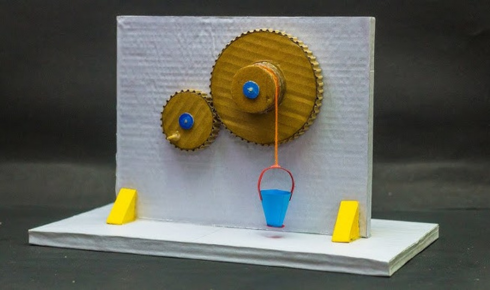
Students often include bevel gears in engineering models to demonstrate principles of motion transfer and mechanical design during educational exhibitions and competitions.
Importance of Science Projects
Science projects provide students with opportunities to apply theoretical knowledge in practical situations. These projects encourage experimentation, observation, and analysis while helping learners understand scientific concepts more effectively.
A well-designed science project allows students to investigate real-world problems and develop innovative solutions. By building working models and conducting experiments, learners gain valuable hands-on experience that enhances classroom learning.
Benefits of Science Projects for Students
Science projects help improve creativity, communication, and research skills. Students learn how to formulate hypotheses, collect data, and draw conclusions based on evidence.
Additionally, project-based learning promotes teamwork and independent thinking. These experiences help prepare students for future academic and professional challenges in science, technology, engineering, and mathematics fields.
Popular Science Project Ideas
There are countless science project ideas suitable for various age groups and educational levels. Examples include renewable energy models, water filtration systems, robotic vehicles, smart irrigation systems, and weather monitoring devices.
Projects involving mechanical components such as gears and motors are particularly effective because they demonstrate practical engineering principles while encouraging innovation and creativity.
Exploring Science Fair Experiments
Science fair experiments are structured investigations designed to answer specific scientific questions. These experiments provide students with an opportunity to showcase their understanding of scientific methods and present findings to judges and audiences.
Science fairs create an exciting environment where students can share ideas, learn from others, and gain confidence in presenting technical concepts. They also encourage healthy competition and curiosity-driven learning.
Effective Science Fair Experiment Categories
science fair experiments can be conducted across various disciplines, including physics, chemistry, biology, environmental science, and engineering. Popular experiment topics include plant growth studies, renewable energy systems, chemical reactions, water purification methods, and electricity generation.
Students often select projects that address real-world challenges because they demonstrate practical relevance and innovation.
Tips for Successful Science Fair Experiments
Successful experiments begin with a clear research question and a well-defined objective. Students should carefully plan procedures, record observations accurately, and analyze results thoroughly.
Visual displays, charts, and working models can significantly improve project presentations. Demonstrating practical applications of scientific concepts often leaves a strong impression on judges and visitors.
Combining Mechanical Engineering with Science Education
Integrating bevel gears into science projects and science fair experiments creates an engaging learning experience. Students can design models that demonstrate motion transfer, mechanical advantage, and energy efficiency.
These projects bridge the gap between theoretical learning and practical engineering applications, helping students develop a deeper understanding of scientific and technological concepts.
Conclusion
Bevel gears, science projects, and science fair experiments play an important role in promoting hands-on learning and innovation. Bevel gears demonstrate essential mechanical principles, science projects encourage practical problem-solving, and science fair experiments help students explore scientific methods in depth. By combining these elements, learners can develop valuable technical skills, enhance creativity, and build a strong foundation for future success in science and engineering fields.