From the journal · November 4, 2026
Drifting Over Cozumel’s Reefs: What I Wish I’d Known Before My First Dive
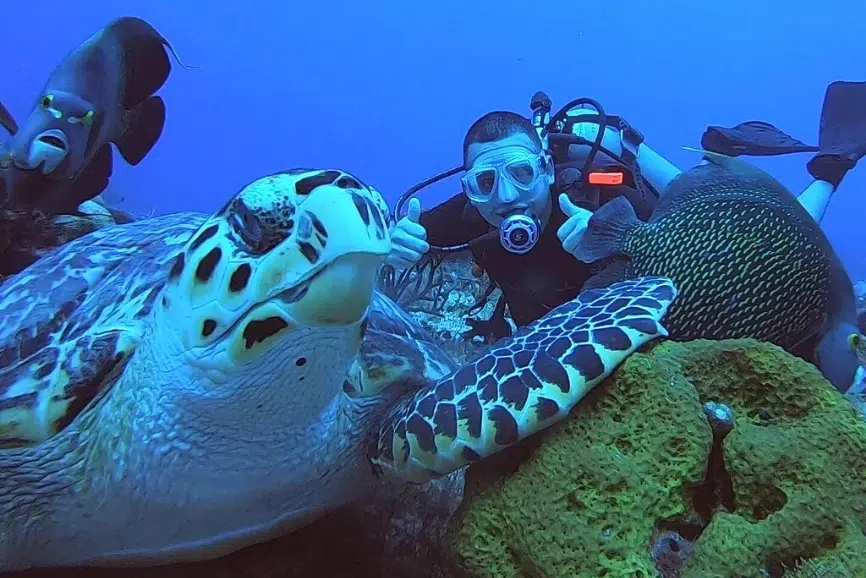
The first time I rolled backward off a boat in Cozumel, I wasn’t thinking about turtles or coral or any of the stuff you see on postcards. I was thinking, “Why is the water moving?” Nobody had really explained the current to me, and for about ten seconds I felt like a leaf in a gutter.
Then I relaxed, and the whole island slid past me like a slow-motion movie. Honestly, I’ve been chasing that feeling ever since.
Related reading: Four Days in Cebu · School Holiday Activities in KL That Won’t Break the Bank
If you’re thinking about cozumel diving, here’s the thing people don’t always say out loud: it’s not like most Caribbean trips. Cozumel sits right along the Mesoamerican Reef, the second-largest barrier reef system on the planet, and a steady current runs along the island’s western side. That means most dives here are drift dives. You hop in, you breathe, you let the water carry you along the wall, and the boat follows your bubbles and picks you up at the end. It’s weirdly effortless, almost lazy. You barely kick.
Some people love that. Others get a little nervous, and that’s fair. If you’ve only dived in calm, sheltered spots, the idea of moving along with a current can feel like losing control. It isn’t, really. You just have to stay close to your guide and keep an eye on your buddy, and the rest sort of takes care of itself.
Why the visibility ruins you for everywhere else
Okay, let me gush for a second. The visibility in Cozumel is ridiculous. On a good day you can see well past a hundred feet, and the water has this clean, blue clarity that makes everything look a little unreal. Sponges the size of armchairs. Coral formations stacked like old cathedral ruins. Eagle rays gliding by like they’ve got somewhere better to be. And if you’re lucky, a splendid toadfish, a funny-looking little guy found basically nowhere else, sulking in a crevice.
I remember hovering at about sixty feet one morning, just watching a hawksbill turtle chew on a sponge. Didn’t care about my air, didn’t care about the time. Eventually my guide tapped his tank, and I snapped out of it. That kind of moment is why people come back year after year.
Picking where to go (and who to go with)
Here’s where I’d slow you down a little. Choosing a good operator matters more than almost anything else on the trip. Cozumel dive shops vary a lot, and the right one can make or break your week. Some run huge boats packed with twenty-odd divers and move through the schedule like a conveyor belt. Others keep groups small, maybe six or eight people, and actually take the time to brief you properly.
What I look for is pretty simple. Do they brief you clearly before each dive? Is the gear well kept? Do they seem to care about your comfort level, or are they just ticking boxes? And do they respect the marine park rules, which are taken seriously around here? Ask about group size, ask about the guide-to-diver ratio, and don’t be shy about asking questions. Good shops don’t mind. The great ones kind of enjoy it.
A few extras are worth asking about too: nitrox availability, whether they’ll tailor a dive plan for newer divers, and if the boat has decent shade. Sounds minor until you’re sitting in the sun during a surface interval, trust me.
The big names, and a couple of quieter ones
Now for the fun part. The cozumel dive sites people talk about most are Palancar Reef, Santa Rosa Wall, and Colombia, and they earn the hype. Palancar is a sprawling system of coral heads, swim-throughs, and canyons, and you could dive it a dozen times and see something new each trip. Santa Rosa is more dramatic, with a steep wall dropping off into deep blue and the kind of overhangs that make you feel very small. Colombia has towering coral pinnacles that are just stunning when the light hits them right.
But don’t sleep on the gentler spots. Paradise Reef and Chankanaab are lovely for newer divers or for a relaxed afternoon dive, and they’re usually calmer. Further south, Punta Sur and Maracaibo are more advanced, with stronger currents and a wilder feel. They’re not for everyone, but if you’ve got a bit of experience, they’re unforgettable.
One quick note: if you’re a beginner, tell your guide. Seriously. Nobody’s going to judge you, and they’d much rather steer you toward a mellow site than watch you struggle against a current you weren’t ready for.
A few practical bits, before I ramble more
The best conditions tend to run from roughly December through April, when the seas are calmer and the weather is friendlier. Hurricane season, roughly June through November, can mean rougher days or the occasional cancelled trip, though plenty of people still dive then and get great trips. Just stay flexible.
Reef-safe sunscreen is a must. Regular stuff harms the coral, and the marine park rules are strict about it. You’ll also pay a small park fee, which goes toward protecting the reef, so it’s worth it. And hey, pack a light rain jacket. Boats get breezy.
Oh, and drink water. More than you think. Diving dehydrates you, and the Mexican sun doesn’t help.
The part I keep coming back to
What really sticks with me about Cozumel isn’t a single dive. It’s the rhythm of it. Wake up, grab coffee, load the boat, glide along a wall for fifty minutes, eat tacos at some little place near the pier, do it again. The days blur together in the best way.
I’ve dived in plenty of spots since, some fancier, some wilder. But there’s a quiet confidence to Cozumel that I find hard to shake. The reef is healthy, the water is clear, the locals know what they’re doing, and the island has been welcoming divers for decades.
So if you’ve been on the fence, take this as a nudge. Book the trip, do your homework on the operator, and give yourself a few days to settle into the drift. You’ll probably spend the first dive a little tense, like I did. By the third, you’ll just be floating, grinning around your regulator, watching the reef roll by like it’s been waiting for you.


